
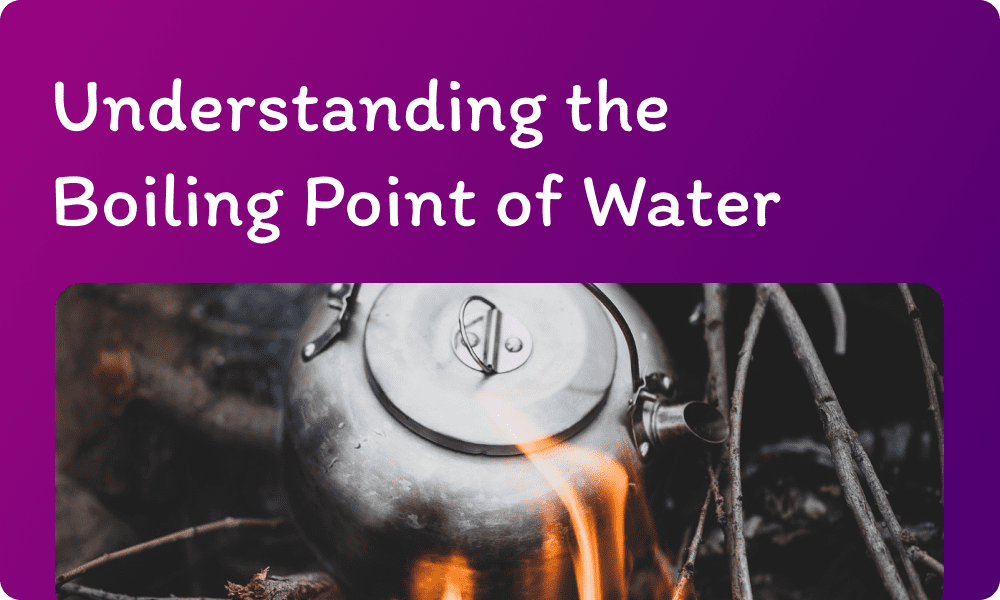
Water is a fundamental substance in our daily lives, and its boiling point is a key aspect of its behavior. The boiling point refers to the temperature at which water transitions from a liquid to a gas state, known as vaporization. For pure water at standard atmospheric pressure (1 atmosphere), this occurs at a precise temperature of 100 degrees Celsius (212 degrees Fahrenheit).
Factors Affecting Boiling Point:
Several factors influence the boiling point of water. One primary factor is atmospheric pressure: at higher elevations, where atmospheric pressure is lower, water boils at temperatures slightly below 100 degrees Celsius. Conversely, at higher pressures, such as in a pressure cooker, water can reach temperatures above 100 degrees Celsius before boiling.
Applications and Importance:
Understanding water’s boiling point is crucial in various practical applications. From cooking and sterilization processes in everyday life to industrial applications like steam generation in power plants, precise control of boiling point ensures efficiency and safety. Moreover, in scientific research and education, it serves as a fundamental concept in understanding phase changes and thermodynamics.
In conclusion, water’s boiling point of 100 degrees Celsius is a fundamental aspect of its physical properties, influencing a wide range of practical applications and serving as a cornerstone in scientific understanding.

